A child in danger? You don't need proof to call.
119 answers 24/7, to children and to worried adults. The listener assesses the situation with you and, if needed, passes it on to the child protection services of the département (local council).
119
Are you under 18? This part is for you.
Free, day and night. It does not show on your parents' phone bill.
- It's not your faultIf an adult hits you, insults you, or touches you in a way that makes you uncomfortable or scared, they are the one in the wrong. Always.
- You can talk about it without giving your nameCall 119, or write on the 119 chat (up to age 21).
- Bullying, photos, insults onlineCall 3018. They can get content removed from social media.
- In danger right nowCall 17, or text 114 if you can't speak.
You can also talk to an adult you trust: school nurse, teacher, doctor, coach.
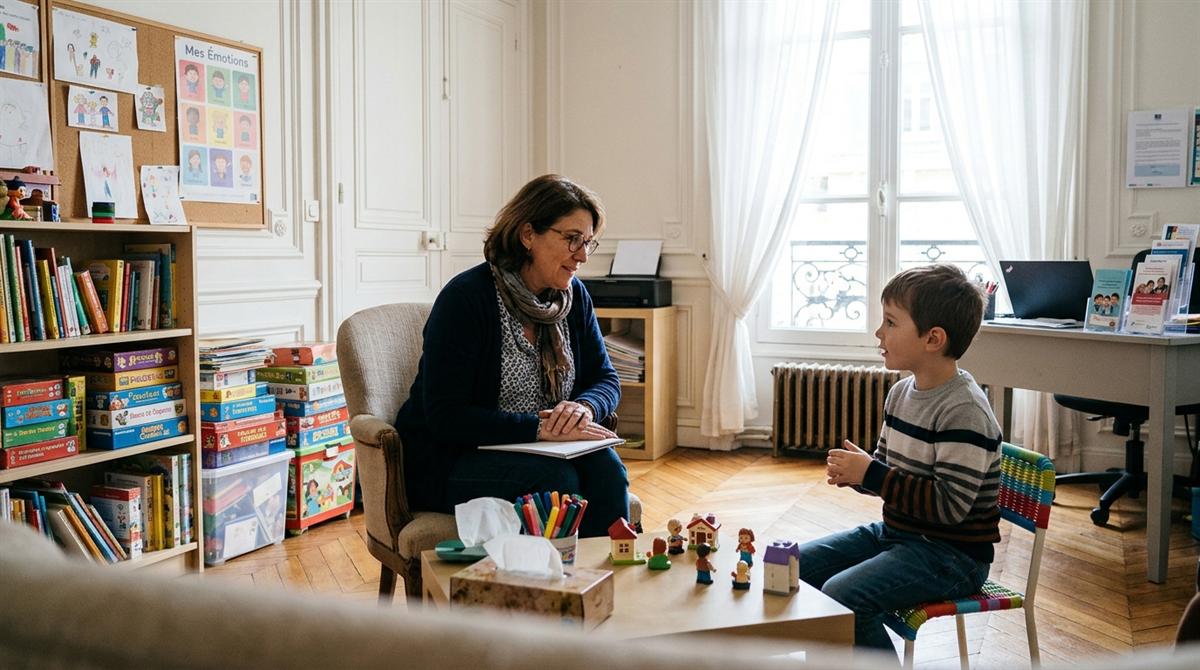
Listening to the child
A child confides in you: what to do.
Your role is not to investigate. It is to believe them, protect them and pass it on.
Believe them
Tell them they did the right thing by speaking up and that it is not their fault.
Let them tell it
No leading questions (“Was it Dad who…?”). Listen, don't react with anger.
Write down their exact words
As soon as possible: what they said, in quotation marks, with the date and time.
Don't promise to keep it secret
Tell them you are going to ask for help from people whose job it is. Don't confront the adult involved.

Warning signs
The signs that should worry you.
One sign alone proves nothing. Several signs, or a sudden change, are reason enough to talk to 119.
On the body
- Bruises, burns, fractures with no clear explanation
- Repeated injuries, in hidden places
- Hunger, tiredness, very poor hygiene
- Medical care not given
In behaviour
- Fear of going home, or of one particular adult
- Withdrawal, sadness, or sudden aggression
- Going back to behaviour of a younger child (bedwetting)
- Repeated absences, falling school results
Sexual violence
- Sexual gestures or words not suited to their age
- Pain, infections, eating disorders
- Gifts, secrets with an adult
- Online contact with an older stranger
A child who witnesses violence between their parents is a victim too. See the women's page.
What happens next
After a call or a report of concern.

- The CRIP receives the information. The CRIP (the unit of the conseil départemental, the local council, that collects reports about children at risk) centralises everything about children in danger.
- An assessment is carried out. Social workers meet the family and the child. This can lead to help for the family or educational support.
- The case may go to a judge. If the danger is serious or the family refuses help, the public prosecutor refers the case to the juvenile judge, who can order the child to be placed in care.
- Serious and immediate danger? Don't go through the CRIP: call 17, or report directly to the public prosecutor (procureur de la République).
 3018bullying and online violence
At school
Adults trained to listen.
School nurse, senior education adviser (CPE), teacher, school social worker: they know how to listen to a pupil and pass the information on to the CRIP.
For bullying between pupils, 3018 also helps parents take the matter to the school.
Professionals
School, health, sport, early childhood.
Report of concern (information préoccupante)
A child in danger or at risk of danger, with no threat to life: send it to the CRIP of the conseil départemental (article L. 226-3 of the Code de l'action sociale et des familles, the French Social Action and Families Code). Describe dated facts, not interpretations.
Report of concern templateReport to the public prosecutor
Serious and immediate danger, or sexual violence: report directly to the public prosecutor (procureur de la République), with a copy to the CRIP. Professional confidentiality does not prevent you from doing so (article 226-14 of the Code pénal, the French Criminal Code).
119 also advises professionals

Near you
Conseil départemental, PMI (mother and child health centre), police, victim support.
The distance is calculated on your device. Your location is not sent to anyone.
The search for nearby places needs JavaScript. Otherwise, call 119: they will point you the right way.
Frequently asked questions
Before calling 119.

Can I stay anonymous?
Yes. 119 accepts anonymous calls. Giving your contact details does help the services get back to you to complete the assessment.
What if I'm wrong?
A report made in good faith cannot be held against you, even if the assessment concludes there is no danger. Only a report you know to be false is punished.
Should I tell the parents?
No, not you. The parents are informed by the services, unless this goes against the child's interest. Never confront an adult the child has named.
Does 3020 still exist?
No. Since 2024, 3018 is the single number for school bullying and online violence. Old posters still show 3020.
Keep going
The other pages.
One family can be affected in several ways: violence against an adult often affects the children and animals too.